Some musicians are perfectionists, fiddling and fussing over every last detail, to the extent that in some cases (hello Kevin Shields) they simply stop releasing music at all. Other musicians are the opposite: they're ceaselessly productive, seemingly releasing something new every other week, regardless of whether the results appear to have taken any longer to create than to perform (hello Robert Pollard). Falling a bit toward the latter category is Sacramento-based musician Anton Barbeau. He's written some wonderful, catchy songs - and he's released a whole bunch of songs that sound pretty much like "Oh - the tape was running? Cool - we'll release it."
Barbeau's problem is not only that he keeps writing songs and making music but that he's intrigued by (and at least moderately talented in) a number of different genres and styles. So it is that he tends to work better when some constrictions are placed on his creativity. His recent collaborations with Scott Miller in the revived Loud Family were probably strengthened by the need for the songs to work in the context of Miller's new songs and catalog (as well as, most likely, a desire to do well in the eyes of one of Barbeau's most-admired musicians). Under his own name, Barbeau has just released In the Village of the Apple Sun, which (as you might guess from the title) Barbeau conceived of as his "psychedelic" album. While some schools of psychedelia might support aimless noodling and pointless weird noise, in Barbeau's case the concept gave a framework to his songwriting and arranging, one which makes the CD more cohesive (and less full of random doodles, here confined to sub-30-second little sound pieces that could easily have been integrated into surrounding tracks without ill effect).
The title track begins with a folkish minor-key acoustic guitar chord structure that rapidly mutates into a more conventionally "psychedelic" sound with a winding recorder solo, then a crashing, compressed drum part along with fuzz bass. And of course there's a backwards guitar solo.
Elsewhere, Barbeau deploys "Strawberry Fields"-like drumming along with spacely synth burblings in the first verse of "When I Was 46 in the Year 13" (not such an odd title, really...if you were born in 1967), which leads to a nice piano sound on the iteration of the verse. Plus...acoustic guitar! (If you're thinking of Viv Stanshall, good for you.)
I'm not sure if any are still available, but a second disc of outtakes, odd experiments, and the like (and finally: the right place for these things!) came with the first batch of orders of the CD. You can order it from Barbeau's website - there's an e-mail link if you want to inquire about the bonus CD. Some of those outtakes are nearly entire songs, sometimes in different arrangements. For example, "Eric Has Gone Wrong" is just a stub on the actual CD, but it was originally a full-length song (although the version here lacks a proper second verse).
The nice thing for me about Barbeau's approach to psychedelia is that it's both goofy and reverent: goofy enough that the pretentiousness sometimes inherent in the genre is mitigated, but reverent enough to ensure that the songs and sounds work on their own terms and that the whole thing isn't regarded as a piss-take.
Anton Barbeau "In the Village of the Apple Sun"
Anton Barbeau "When I Was 46 in the Year 13"
Anton Barbeau "Eric Has Gone Wrong" (alt. vers.)

8.28.2006

8.25.2006
parody swallowed once more by gluttonous reality
If you wanted to make up a stereotypical satirical image of the worst aspects of US culture, you could probably do worse than depict someone stuffing his face with junkfood...and then calling it a "sport," and then getting all serious about the "sport" by describing "training regimens" and the like. Of course, it would be redundant to make up such an image - since competitive eaters (who call themselves - and someone wasn't listening to their inner 12-year-old, or maybe was - "gurgitators") are all the rage.
How many ways is this phenomenon completely disgusting? We'll start with the immediate and obvious: it's beyond me why anyone would want to watch someone shove bratwursts or pies or creamed corn into their face (why not throw some hungry lions into the mix so we can have, in the immortal words of Lemony Snicket, "violence and sloppy eating"?), especially when no doubt not all of that food remains in its intended destination. Which brings us to visceral point number two: our "gurgitators" deny the aptness of their chosen term in its phonetic proximity to a more commonly known word...but I'd hate to witness the early days of a prospect gurgitator, and I suspect that no matter what they say for public, uh, consumption, gurgitators frequently re-g. backstage out of the camera's sight after events. Contrary to what you'd expect, a lot of these folks are not enormous pigs (two famous competitors barely break 100 pounds), but when the champion at a recent contest downs nearly 60 brats in 10 minutes, what else can you conclude? A brat is nearly 300 calories; 60 of them is 18,000 calories, or nearly a week and a half's daily caloric recommendations. But these folks can't fast before events, because the stomach needs to be stretched (some describe guzzling diet sodas in mass quantities beforehand). Are we to believe that they simply do not eat for a week after each competition? I don't: I think the Roman feather plays its role.
And taking the gurgitators' word for their abstention from the vomitorium, I'd hate to think of what kind of traffic conditions prevail in their intestines following such a binge of bratwurst.
Are you disgusted yet? Or are you entertained by the thrillingly athletic derring-do of these well-trained sportsmen and sportswomen?
Then there are the social effects: in a nation where obesity is an ever-increasing health problem, with promises to lead to even worse problems in the future, it makes perfect sense to valorize gross displays of overeating, right? And to pretend that people can do this without blimping out to Wellesian proportions as well...
Finally, in a nation where 33 million people are unable to afford adequate food, the sheer waste of this spectacle is obscene, even aside from the grossness of the event itself. No wonder so many people in the world think of Americans as disgusting pigs.
Good thing we have comedians to distract us, right? Here are three food-related comedy bits: Patton Oswalt on the evolution of the modern menu, David Cross on chi-chi food choices, and the Firesign Theatre (oblique as always) addressing the perils of our addiction to "More Sugar!"
Patton Oswalt "Steak"
David Cross "When It Comes to Jews, Behavior One Might Perceive as Obnoxious and Annoying I Present as 'Quirky' But It's Okay to Joke About It Because I, Myself, Am Jewish!"
The Firesign Theatre "Don't Crush That Dwarf, Hand Me the Pliers" (excerpted and edited)
How many ways is this phenomenon completely disgusting? We'll start with the immediate and obvious: it's beyond me why anyone would want to watch someone shove bratwursts or pies or creamed corn into their face (why not throw some hungry lions into the mix so we can have, in the immortal words of Lemony Snicket, "violence and sloppy eating"?), especially when no doubt not all of that food remains in its intended destination. Which brings us to visceral point number two: our "gurgitators" deny the aptness of their chosen term in its phonetic proximity to a more commonly known word...but I'd hate to witness the early days of a prospect gurgitator, and I suspect that no matter what they say for public, uh, consumption, gurgitators frequently re-g. backstage out of the camera's sight after events. Contrary to what you'd expect, a lot of these folks are not enormous pigs (two famous competitors barely break 100 pounds), but when the champion at a recent contest downs nearly 60 brats in 10 minutes, what else can you conclude? A brat is nearly 300 calories; 60 of them is 18,000 calories, or nearly a week and a half's daily caloric recommendations. But these folks can't fast before events, because the stomach needs to be stretched (some describe guzzling diet sodas in mass quantities beforehand). Are we to believe that they simply do not eat for a week after each competition? I don't: I think the Roman feather plays its role.
And taking the gurgitators' word for their abstention from the vomitorium, I'd hate to think of what kind of traffic conditions prevail in their intestines following such a binge of bratwurst.
Are you disgusted yet? Or are you entertained by the thrillingly athletic derring-do of these well-trained sportsmen and sportswomen?
Then there are the social effects: in a nation where obesity is an ever-increasing health problem, with promises to lead to even worse problems in the future, it makes perfect sense to valorize gross displays of overeating, right? And to pretend that people can do this without blimping out to Wellesian proportions as well...
Finally, in a nation where 33 million people are unable to afford adequate food, the sheer waste of this spectacle is obscene, even aside from the grossness of the event itself. No wonder so many people in the world think of Americans as disgusting pigs.
Good thing we have comedians to distract us, right? Here are three food-related comedy bits: Patton Oswalt on the evolution of the modern menu, David Cross on chi-chi food choices, and the Firesign Theatre (oblique as always) addressing the perils of our addiction to "More Sugar!"
Patton Oswalt "Steak"
David Cross "When It Comes to Jews, Behavior One Might Perceive as Obnoxious and Annoying I Present as 'Quirky' But It's Okay to Joke About It Because I, Myself, Am Jewish!"
The Firesign Theatre "Don't Crush That Dwarf, Hand Me the Pliers" (excerpted and edited)
8.23.2006
about that "don't make passes" thing...
Here's the cute li'l cartoon from the header at wonkette.com:

And here's the cute li'l photo from the cover of the CD Very Mary Beth from the criminally neglected band The Black Watch: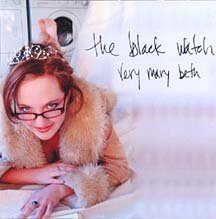
(Download a track from this site!)
Noticing a theme yet?
8.17.2006
Pissed Tris, An LF/Ant Never Forgotten, and Some Rooms of Don's Own
Three recent CDs share somewhat tangled imbrications. Tris McCall has a new CD called I'm Assuming You're All in Bands, recorded live in the studio with his band The New Jack Trippers. Whereas previous McCall joints have explored his native New Jersey, here he's casting some cynical glances across the river at the trendoid scenesters of Brooklyn. The back cover of the CD is a Tintin-style drawing of Tris looking at the Brooklyn Bridge, and at first glance it looks like he's flashing his goods at the natives (it's the long trenchcoat he's wearing). Fortunately, the artist has thoughtfully provided trouser cuffs, socks, and practical footwear for our Tris-surrogate, so that unsavory impression can be disregarded. Well, except that the CD kind of is a big ol' fuck you: McCall has stated that "this album is a repository for ugliness that I hope I've now gotten out of my system," so maybe the illustrator was just catching that aspect of the CD. "Colonial Williamsburg" might be a good example - and its conflation of the Brooklyn neighborhood with the Virginia historical tourist-trap village is a brilliant, cutting conceit. Elsewhere McCall's a bit more ruminative: "The Hymn Against the Whiskey" at first seems like another airing of the occasional puritan strain in McCall's thinking, but ultimately feels more like pain at watching a close friend (fail to) deal with a drinking problem. The semi-unlisted final track (which may or may not be called "Lucky 13" - even though it's the 14th indexed track on the CD) ends the CD by returning Tris to his beloved Hudson County. Oh - and if you happen to be a Brooklyn scenester, the wonderfully bitchy liner notes (heavily redacted: McCall calls them "an evil parlor game") will be a treat: can you spot yourself and all your cool friends?
McCall's 1999 CD If One of These Bottles Should Happen to Fall was produced by Scott Miller of the Loud Family - and as most readers of this page probably know, there's actually a new Loud Family CD, called What If It Works?. Miller was coaxed out of retirement by musical cohort Anton Barbeau (whom Miller apparently wanted to work with as far back as the latter days of Game Theory, according to a recent interview) and into using the Loud Family name by the ruthless corporate honchos of 125 Records. While the piecemeal and collaborative nature of this CD makes it less conceptually coherent than any other of Miller's recordings (although the songs are arranged in a bit of a narrative arc, roughly from cynicism to hope), three of Miller's new tracks are as good as nearly anything he's done: "Song About 'Rocks Off' - which is; "Mavis of Maybelline Towers" - which I glabbered about a couple months back; and "Don't Bother Me While I'm Living Forever" - and three of Barbeau's songs are among his best ("Pop Song 99," "Flow Thee Water," and "What If It Works?"). "Don't Bother Me..." might be the most psychedelic-friendly track Miller's ever recorded (Barbeau outdoes it, though, on his new psych CD Village of the Apple Sun - to be featured here shortly). The guitars swirl, the synths swoop, and Barbeau's backing vocals drift off into a haze. I think the two musicians work well together, despite a sometimes radical disjunction in lyrical approach (Miller's allusive and cerebral but always on point; Barbeau's loose and - as Miller aptly describes him in the interview linked above - rather In His Own Write-era Lennonesque in his loopy free associations); Barbeau's willingness to throw whatever at the wall to see what sticks loosens up Miller's sometimes overly calibrated musical approach, while that focus and concentration reins in some of Barbeau's more prolix tendencies. Their voices mesh beautifully as well, with the slight raspiness in Barbeau's voice adding a bit of grit to Miller's sometimes too-weightless tenor. Incidentally, while their previous recordings might lead you to expect Miller to take the high parts and Barbeau the lower ones, often that's not the case: Barbeau frequently makes use of falsetto, while Miller explores his lower register far more here than he has (notably on their cover of Cat Stevens' "I Think I See the Light").
Up through The Tape of Only Linda, nearly all of Miller's recordings with both Game Theory and the Loud Family were produced by Mitch Easter - who, of course, co-produced R.E.M.'s Murmur with Don Dixon. Dixon too had all but retired - when late in 2004 a couple of demos surfaced, one of which ("Roommate" - available here) is one of those songs that elderly folks like me persist in imagining would be a huge hit single, if radio acted like it did in our childhoods and actually played songs like that. Once more, the heavies at 125 Records leaned on one of their favorite musicians...and in due course, a CD came forth. Intriguingly titled The Entire Combustible World in One Small Room, the CD is another of Dixon's psychological concept albums. His last CD of new material, 2000's The Invisible Man, presented its songs as each being from the viewpoint of a different character - each song helpfully presenting the age of its narrator, concerning whom, Dixon explains in the notes, "I am all of them and none of them." This time around, each track on the CD is set in a different type of room (a hotel suite, a kitchen, an ICU, a dorm, etc.) - but at least one of these "rooms" is described as "your head"...which might give a clue as to which room the title refers to. The album closes with a spooky cover of Let's Active's "Room with a View" (reprised from a Mitch Easter tribute CD a couple years back, and featuring vocals from Dixon's wife Marti Jones, a recording artist in her own right): "you see everything for what it is." It opens, conversely, with the amblingly structured "In Darkness Found" (set, Dixon's notes inform us, in a church). It's a shame Dixon hasn't recorded more: not only is he an unusual writer and meticulous producer, he's a fabulous singer, his gritty voice adding a soulfulness to his pop numbers that the genre too often avoids in favor of a trebly, adolescent callowness. His songs here prove intriguing and diverse, the insanely catchy (the aforementioned "Roommate") set alongside the melancholy, odd, or energetic. Dixon's lyrics are generally introspective and character-based, with the "room" concept proving a fine vehicle by which Dixon rhymes the situation with the psyche.
Tris McCall & the New Jack Trippers "Colonial Williamsburg"
The Loud Family and Anton Barbeau "Don't Bother Me While I'm Living Forever"
Don Dixon "In Darkness Found"
McCall's 1999 CD If One of These Bottles Should Happen to Fall was produced by Scott Miller of the Loud Family - and as most readers of this page probably know, there's actually a new Loud Family CD, called What If It Works?. Miller was coaxed out of retirement by musical cohort Anton Barbeau (whom Miller apparently wanted to work with as far back as the latter days of Game Theory, according to a recent interview) and into using the Loud Family name by the ruthless corporate honchos of 125 Records. While the piecemeal and collaborative nature of this CD makes it less conceptually coherent than any other of Miller's recordings (although the songs are arranged in a bit of a narrative arc, roughly from cynicism to hope), three of Miller's new tracks are as good as nearly anything he's done: "Song About 'Rocks Off' - which is; "Mavis of Maybelline Towers" - which I glabbered about a couple months back; and "Don't Bother Me While I'm Living Forever" - and three of Barbeau's songs are among his best ("Pop Song 99," "Flow Thee Water," and "What If It Works?"). "Don't Bother Me..." might be the most psychedelic-friendly track Miller's ever recorded (Barbeau outdoes it, though, on his new psych CD Village of the Apple Sun - to be featured here shortly). The guitars swirl, the synths swoop, and Barbeau's backing vocals drift off into a haze. I think the two musicians work well together, despite a sometimes radical disjunction in lyrical approach (Miller's allusive and cerebral but always on point; Barbeau's loose and - as Miller aptly describes him in the interview linked above - rather In His Own Write-era Lennonesque in his loopy free associations); Barbeau's willingness to throw whatever at the wall to see what sticks loosens up Miller's sometimes overly calibrated musical approach, while that focus and concentration reins in some of Barbeau's more prolix tendencies. Their voices mesh beautifully as well, with the slight raspiness in Barbeau's voice adding a bit of grit to Miller's sometimes too-weightless tenor. Incidentally, while their previous recordings might lead you to expect Miller to take the high parts and Barbeau the lower ones, often that's not the case: Barbeau frequently makes use of falsetto, while Miller explores his lower register far more here than he has (notably on their cover of Cat Stevens' "I Think I See the Light").
Up through The Tape of Only Linda, nearly all of Miller's recordings with both Game Theory and the Loud Family were produced by Mitch Easter - who, of course, co-produced R.E.M.'s Murmur with Don Dixon. Dixon too had all but retired - when late in 2004 a couple of demos surfaced, one of which ("Roommate" - available here) is one of those songs that elderly folks like me persist in imagining would be a huge hit single, if radio acted like it did in our childhoods and actually played songs like that. Once more, the heavies at 125 Records leaned on one of their favorite musicians...and in due course, a CD came forth. Intriguingly titled The Entire Combustible World in One Small Room, the CD is another of Dixon's psychological concept albums. His last CD of new material, 2000's The Invisible Man, presented its songs as each being from the viewpoint of a different character - each song helpfully presenting the age of its narrator, concerning whom, Dixon explains in the notes, "I am all of them and none of them." This time around, each track on the CD is set in a different type of room (a hotel suite, a kitchen, an ICU, a dorm, etc.) - but at least one of these "rooms" is described as "your head"...which might give a clue as to which room the title refers to. The album closes with a spooky cover of Let's Active's "Room with a View" (reprised from a Mitch Easter tribute CD a couple years back, and featuring vocals from Dixon's wife Marti Jones, a recording artist in her own right): "you see everything for what it is." It opens, conversely, with the amblingly structured "In Darkness Found" (set, Dixon's notes inform us, in a church). It's a shame Dixon hasn't recorded more: not only is he an unusual writer and meticulous producer, he's a fabulous singer, his gritty voice adding a soulfulness to his pop numbers that the genre too often avoids in favor of a trebly, adolescent callowness. His songs here prove intriguing and diverse, the insanely catchy (the aforementioned "Roommate") set alongside the melancholy, odd, or energetic. Dixon's lyrics are generally introspective and character-based, with the "room" concept proving a fine vehicle by which Dixon rhymes the situation with the psyche.
Tris McCall & the New Jack Trippers "Colonial Williamsburg"
The Loud Family and Anton Barbeau "Don't Bother Me While I'm Living Forever"
Don Dixon "In Darkness Found"
8.16.2006
been busy...
...so this is a brief and pointless post, concerning words or wordlike things that ought to describe obscure and outdated maladies:
The maws.
Brewer's tingle.
Scantles.
The withering brithets.
Dundles.
You may provide a description of the symptoms of any of these, if you care to do so. You may also try calling in sick to work, claiming affliction from these.
The maws.
Brewer's tingle.
Scantles.
The withering brithets.
Dundles.
You may provide a description of the symptoms of any of these, if you care to do so. You may also try calling in sick to work, claiming affliction from these.
8.08.2006
these are four different songs
Some recent musical acquisitions. Find the hidden thread!
Gentle Giant "Proclamation" (The Power and the Glory): Another chance to get in touch with my inner prog-head. In six or so minutes, these guys put down enough musical ideas to fill a lot of other folks' albums (and about enough notes, too...). The most obvious non-rock influences on Gentle Giant's music (not all that audible in this track) are madrigals and baroque counterpoint - influences which admirably serve the band's interest in complexity but also mark them out from other proggers. Note also that the electric piano rhythm bit is funky enough to have been sampled by hip-hoppers (or so I read once somewhere on the InterSoT...). The last little snippet belongs to the next track: early Capitol CD indexed by feral children.
Lou Reed "The Bells" (The Bells): Some of this album is terribly cheesy, at times sounding almost like the music they (used to?) play at the end of Saturday Night Live - but there are also some inspired bits of weirdness (like this track), some rare moments of non-ironic emotionality, and (both cheesy and inspired) the immortal "Disco Mystic" (that's its entire lyric). That's jazzer Don Cherry (also father of Neneh and, uh, Eagle-Eye) blatting away on the trumpet.
I picked up a couple of tribute albums as well. I don't care: I'm always curious what people do with songs I like, even I don't like what they do with them. Here are two tracks that I do like.
Okkervil River "Riot Act" (Almost You: The Songs of Elvis Costello): This has always been one of my favorite EC songs, its lyric managing the neat trick of seeming prickly and defensive if taken as directed outward, shame-filled and self-hating if directed inward. (It was written after the Ray Charles incident, about which Costello later wrote far more openly.) Okkervil River play it pretty straight, shifting the arrangement and production just enough to make it interesting - and Will Sheff's vocals are finely felt.
The Wrens "They'll Need a Crane" (Hello Radio: The Songs of They Might Be Giants): Boy, those nutty Johns - they're so goofy and funny and light-hearted and geeky, aren't they? Laugh...ha-ha. That that's the prevailing impression of the band proves only that too many people are almost painfully unaware of any sort of emotional complexity (flashback to happy loving couples swaying blissfully at a concert to the strains of R.E.M. playing "The One I Love" - yeesh, oblivious much?). I suppose in some ways the Wrens' choice to play this one slow and quiet is maybe too obvious - now that the lyrics aren't swathed in Linnell's gloriously catchy and rapidfire tune-wrangling - but that's not all they do with the track. You'll note that the Wrens have moved the Freudian slip of a bridge to an audio-verite intro, and allowed the track to build slowly to a simmer, rather than either explode or (as in the original) carry on in blissful semi-denial.
Gentle Giant "Proclamation" (The Power and the Glory): Another chance to get in touch with my inner prog-head. In six or so minutes, these guys put down enough musical ideas to fill a lot of other folks' albums (and about enough notes, too...). The most obvious non-rock influences on Gentle Giant's music (not all that audible in this track) are madrigals and baroque counterpoint - influences which admirably serve the band's interest in complexity but also mark them out from other proggers. Note also that the electric piano rhythm bit is funky enough to have been sampled by hip-hoppers (or so I read once somewhere on the InterSoT...). The last little snippet belongs to the next track: early Capitol CD indexed by feral children.
Lou Reed "The Bells" (The Bells): Some of this album is terribly cheesy, at times sounding almost like the music they (used to?) play at the end of Saturday Night Live - but there are also some inspired bits of weirdness (like this track), some rare moments of non-ironic emotionality, and (both cheesy and inspired) the immortal "Disco Mystic" (that's its entire lyric). That's jazzer Don Cherry (also father of Neneh and, uh, Eagle-Eye) blatting away on the trumpet.
I picked up a couple of tribute albums as well. I don't care: I'm always curious what people do with songs I like, even I don't like what they do with them. Here are two tracks that I do like.
Okkervil River "Riot Act" (Almost You: The Songs of Elvis Costello): This has always been one of my favorite EC songs, its lyric managing the neat trick of seeming prickly and defensive if taken as directed outward, shame-filled and self-hating if directed inward. (It was written after the Ray Charles incident, about which Costello later wrote far more openly.) Okkervil River play it pretty straight, shifting the arrangement and production just enough to make it interesting - and Will Sheff's vocals are finely felt.
The Wrens "They'll Need a Crane" (Hello Radio: The Songs of They Might Be Giants): Boy, those nutty Johns - they're so goofy and funny and light-hearted and geeky, aren't they? Laugh...ha-ha. That that's the prevailing impression of the band proves only that too many people are almost painfully unaware of any sort of emotional complexity (flashback to happy loving couples swaying blissfully at a concert to the strains of R.E.M. playing "The One I Love" - yeesh, oblivious much?). I suppose in some ways the Wrens' choice to play this one slow and quiet is maybe too obvious - now that the lyrics aren't swathed in Linnell's gloriously catchy and rapidfire tune-wrangling - but that's not all they do with the track. You'll note that the Wrens have moved the Freudian slip of a bridge to an audio-verite intro, and allowed the track to build slowly to a simmer, rather than either explode or (as in the original) carry on in blissful semi-denial.
8.06.2006
grammar problem, or self-centered, alcoholic waitstaff?
Notice printed on my bill at a restaurant I ate at recently:
We'll be happy to call a cab for you after enjoying our libations.
"Shut your word hole, jerk - I'll call a cab when I'm done with my drinkin'. If you're in such a hurry call it yourself."
We'll be happy to call a cab for you after enjoying our libations.
"Shut your word hole, jerk - I'll call a cab when I'm done with my drinkin'. If you're in such a hurry call it yourself."
8.05.2006
a partial idiot's guide to Cat Steven - (part 2)
Cat Stevens' fourth album Catch Bull at Four found a few changes in his music. His earlier work had been built primarily on the interplay between his and Alun Davies' acoustic guitars. Although Stevens had often added keyboard accents to his work, from this point keyboard became far more prominent in the mix of his songs. A good example is "Angelsea," which features a wonderful, vintage-'70s synth sound (I'm particularly a geek for loving the swooping octave drops at the song's ending). Incidentally, I have no idea what the words are underneath the chorus - but I don't believe the websites that claim they have anything to do with Carly Simon (I'm going to guess it's Stevens singing in some other language again, as he'd done on Teaser's "Rubylove" and on this album on "O Caritas.") The instrumentation of "18th Avenue" is almost entirely keyboards, and also introduces Del Newman's orchestrations, which would play a larger role on Stevens' next album Foreigner. "18th Avenue" itself is a dynamic, curiously structured track, oddly reminiscent (if proleptically) of a Springsteen epic turned inward (even down to the title).
If Catch Bull at Four had seemed transitional, Foreigner was definitively a change. Many of the musicians who'd worked with Stevens were gone, including Davies; Stevens' whimsical cover art was gone, replaced by a stark, passport-like photographic self-portrait; and the album's titular centerpiece was an 18-minute suite. Perhaps because it was one of the first albums by Stevens I heard (as opposed to the singles), I'm fonder of it than a lot of folks seem to be. What some critics can't seem to get their heads around is that as a suite, it is a melding-together of several distinct pieces: that is, you could regard it as four songs run together, with a few bits of musical material held in common (and one part recurring to join the whole thing together). The first four and a half minutes gives a good sense of what Stevens is up to. After an introductory bit which returns later, Stevens launches into a fairly straightforward pop song, heavy on the keys. This leads into an extended instrumental break - and if you're thinking, hmm, early '70s, 18-minute suite, lots of keyboards, extended instrumental: must be prog rock, you'd be mostly wrong. While there's a bit of proggishness lurking around the edges, the sound is far closer to some of the more ambitiously arranged and orchestrated R&B from this era: Isaac Hayes, Marvin Gaye's What's Going On, and so forth. The album closes with a somewhat odd song called "100 I Dream," which again has a light R&B lilt but a somewhat odd, chorusless structure. The lead-in to the bridge features an odd lurch into falsetto and a tremolo guitar, which returns on the fade as Stevens hiccups into that falsetto in an almost donkey-ish fashion.
Stevens' next album, Buddha & the Chocolate Box, continued his exploration of the keyboard. While "Ready" features a very lively treated rhythm guitar and prominent female backing vocals, the bright, rather sine-y synth figure in the bridge is the part I remember best in its shining melodicism. "Sun/C79" joins a brief, cryptic piece about the sun to a lyric set as a confession, from a man to his son, about the woman who's his mother. The celeste-like figure at the beginning recurs, modulated, as another lovely synth figure (the vintage analog synth sounds on this album are a joy - none of the usual ELP squarewave-y stuff; Stevens favored cleaner tones), and Stevens' acoustic guitar energetically powers the chorus. I'm fond of the drumming here as well.
(Stevens' next three albums (Numbers, Izitso, and Back to Earth) were his last three pop albums, and are generally considered quite a drop-off in quality (although I have fond memories of some tracks on Izitso). I don't own them yet - so there's no part 3 - but I may well pick them up eventually. After Back to Earth, and a near-drowning, Stevens converted to Islam and left pop music. He's recorded a handful of spiritual CDs, a children's record, and a religiously oriented album that some critics have compared musically to Teaser and the Firecat - none of which I've heard.)
If Catch Bull at Four had seemed transitional, Foreigner was definitively a change. Many of the musicians who'd worked with Stevens were gone, including Davies; Stevens' whimsical cover art was gone, replaced by a stark, passport-like photographic self-portrait; and the album's titular centerpiece was an 18-minute suite. Perhaps because it was one of the first albums by Stevens I heard (as opposed to the singles), I'm fonder of it than a lot of folks seem to be. What some critics can't seem to get their heads around is that as a suite, it is a melding-together of several distinct pieces: that is, you could regard it as four songs run together, with a few bits of musical material held in common (and one part recurring to join the whole thing together). The first four and a half minutes gives a good sense of what Stevens is up to. After an introductory bit which returns later, Stevens launches into a fairly straightforward pop song, heavy on the keys. This leads into an extended instrumental break - and if you're thinking, hmm, early '70s, 18-minute suite, lots of keyboards, extended instrumental: must be prog rock, you'd be mostly wrong. While there's a bit of proggishness lurking around the edges, the sound is far closer to some of the more ambitiously arranged and orchestrated R&B from this era: Isaac Hayes, Marvin Gaye's What's Going On, and so forth. The album closes with a somewhat odd song called "100 I Dream," which again has a light R&B lilt but a somewhat odd, chorusless structure. The lead-in to the bridge features an odd lurch into falsetto and a tremolo guitar, which returns on the fade as Stevens hiccups into that falsetto in an almost donkey-ish fashion.
Stevens' next album, Buddha & the Chocolate Box, continued his exploration of the keyboard. While "Ready" features a very lively treated rhythm guitar and prominent female backing vocals, the bright, rather sine-y synth figure in the bridge is the part I remember best in its shining melodicism. "Sun/C79" joins a brief, cryptic piece about the sun to a lyric set as a confession, from a man to his son, about the woman who's his mother. The celeste-like figure at the beginning recurs, modulated, as another lovely synth figure (the vintage analog synth sounds on this album are a joy - none of the usual ELP squarewave-y stuff; Stevens favored cleaner tones), and Stevens' acoustic guitar energetically powers the chorus. I'm fond of the drumming here as well.
(Stevens' next three albums (Numbers, Izitso, and Back to Earth) were his last three pop albums, and are generally considered quite a drop-off in quality (although I have fond memories of some tracks on Izitso). I don't own them yet - so there's no part 3 - but I may well pick them up eventually. After Back to Earth, and a near-drowning, Stevens converted to Islam and left pop music. He's recorded a handful of spiritual CDs, a children's record, and a religiously oriented album that some critics have compared musically to Teaser and the Firecat - none of which I've heard.)
8.04.2006
8.03.2006
a partial idiot's guide to Cat Stevens - (part 1)
For some reason, after a period of forgetting his music that lasted probably twenty-odd years, I've recently become reinterested in Cat Stevens. The recent (and very faithful) cover version of his "I Think I've Seen the Light" by the Loud Family no doubt contributed, but I think it's more generally one of my periodic attempts to revisit and re-evaluate music of the past.
The problem might be summed up by the fact that the first Cat Stevens song a lot of people think of is probably "Morning Has Broken" - which has become such a central item in terrible '70s "soft-rock" compilations that it colors his entire reputation. The song is atypical (it's not his lyric, for one thing), and its perspective is rather more willfully naive than Stevens' usual. To my ears it's one of his weakest songs - although I'm sure it's kept Stevens (who's converted to Islam and changed his name to Yusuf Islam - perhaps you'd heard?*) and Rick Wakeman (who played the piano track) well supported over the years.
But Stevens is no Dan Fogelberg. (Saying that, I realize I'm thinking of that dreadful "Auld Lang Syne" thing he did: for all I know, Fogelberg's done better stuff.) As "folk-rockers" go, he's a bit less smooth and more unpredictable than most. His voice, for one thing, is rather rough-edged with a bit of a rasp to it, and while his music can often be quiet and beautiful, it's seldom entirely restful, since a certain rhythmic agitation shows up in both the musical rhythms and Stevens' vocal phrasings. And Stevens wasn't afraid to draw from other musical streams: to varying degrees he sometimes incorporated ideas from psychedelia, R&B, prog rock, and even Greek folk music (Stevens was born Stephen Georgiou, of Greek and Swedish parentage).
After a period of songwriting success at a very young age, Stevens was stricken with tuberculosis and essentially left music entirely - something he would do yet again, after another brush with death in the late '70s.
The point of the biographical info is to illustrate something I hear in his music: there is always a sense of fragility, of delicacy, but also of endurance, searching, and a somewhat restive sense of ill-ease. He never seems entirely at home. That Stevens ultimately ended up a religiously dedicated man is unsurprising. Even on his first solo album Mona Bone Jakon, while the lyric of "I Think I See the Light" seems to refer to a lover, the religious (in this case Christian) metaphor of light is barely beneath the surface at all. "Katmandu" (later successfully covered by Bob Seger - okay, that's a lie), while certainly being part of the Eastern vogue of the time (1970), seems more about difference, about getting away, but not to any place certain: the first line is "I sit beside the dark." (Peter Gabriel fans will want to note that Gabriel plays the flute on this song.)
Stevens' next album Tea for the Tillerman began his hitmaking career, with "Wild World" and "Longer Boats" both becoming popular (I remember hearing the latter quite a bit on FM radio in the late '70s and early '80s as well). "On the Road to Findout" is perhaps a defining early Stevens song, although you can hear his musical vocabulary stretching out a bit, with the rhythm nearing a gallop as it approaches the chorus. Stevens was never a rocker, but his music was quite often rhythmically energetic. The other side of his personality, the more delicate, reflective side, is on display in "Into White," maybe the single prettiest song he ever recorded. He's said the rather odd lyrics are a reflection of an acid trip (despite his spiritual image, the pop-star Stevens was not at all a monk). But it also reflects a simple, elemental sort of world, a world in miniature, and one whose specific images are very textural and colorful. Stevens was also a painter and illustrator who made his own album covers and released an illustrated children's book loosely based on songs from his third album Teaser and the Firecat.
He's stated that "Teaser" (the boy depicted in the cover image) represents the "soul" of the music, while "Firecat" is responsible for the musical tricks, the shifty time-signatures, the rhythmic fire of his music. This album solidified his commercial prominence, with "Moonshadow," "Peace Train," and the aforementioned "Morning Has Broken" all hitting the charts. "Bitterblue" is maybe a better song than any of those, one which could have profitably been covered by contemporary power-pop acts like Badfinger or the Raspberries. Stevens' own version approaches rock more closely than almost anything else in his catalog. "Changes IV" is another rhythmically energetic track, using a modified Bo Diddley rhythm and a rapid-strummed guitar punctuation (even if the lyrics are a bit...early '70s).
Next time, I'll write about Stevens' next three albums.
* Contrary to common belief, Stevens did not endorse the fatwa against Salman Rushdie. He was asked what Islam taught regarding blasphemy; he replied that it stated that blasphemy was punishable by death, but went on to state that Islam also required its adherents to obey the laws of the nation they lived in. Had Stevens been a Christian and been asked what the Bible says about blasphemy, the answer would have been the same (Leviticus 24:16).
The problem might be summed up by the fact that the first Cat Stevens song a lot of people think of is probably "Morning Has Broken" - which has become such a central item in terrible '70s "soft-rock" compilations that it colors his entire reputation. The song is atypical (it's not his lyric, for one thing), and its perspective is rather more willfully naive than Stevens' usual. To my ears it's one of his weakest songs - although I'm sure it's kept Stevens (who's converted to Islam and changed his name to Yusuf Islam - perhaps you'd heard?*) and Rick Wakeman (who played the piano track) well supported over the years.
But Stevens is no Dan Fogelberg. (Saying that, I realize I'm thinking of that dreadful "Auld Lang Syne" thing he did: for all I know, Fogelberg's done better stuff.) As "folk-rockers" go, he's a bit less smooth and more unpredictable than most. His voice, for one thing, is rather rough-edged with a bit of a rasp to it, and while his music can often be quiet and beautiful, it's seldom entirely restful, since a certain rhythmic agitation shows up in both the musical rhythms and Stevens' vocal phrasings. And Stevens wasn't afraid to draw from other musical streams: to varying degrees he sometimes incorporated ideas from psychedelia, R&B, prog rock, and even Greek folk music (Stevens was born Stephen Georgiou, of Greek and Swedish parentage).
After a period of songwriting success at a very young age, Stevens was stricken with tuberculosis and essentially left music entirely - something he would do yet again, after another brush with death in the late '70s.
The point of the biographical info is to illustrate something I hear in his music: there is always a sense of fragility, of delicacy, but also of endurance, searching, and a somewhat restive sense of ill-ease. He never seems entirely at home. That Stevens ultimately ended up a religiously dedicated man is unsurprising. Even on his first solo album Mona Bone Jakon, while the lyric of "I Think I See the Light" seems to refer to a lover, the religious (in this case Christian) metaphor of light is barely beneath the surface at all. "Katmandu" (later successfully covered by Bob Seger - okay, that's a lie), while certainly being part of the Eastern vogue of the time (1970), seems more about difference, about getting away, but not to any place certain: the first line is "I sit beside the dark." (Peter Gabriel fans will want to note that Gabriel plays the flute on this song.)
Stevens' next album Tea for the Tillerman began his hitmaking career, with "Wild World" and "Longer Boats" both becoming popular (I remember hearing the latter quite a bit on FM radio in the late '70s and early '80s as well). "On the Road to Findout" is perhaps a defining early Stevens song, although you can hear his musical vocabulary stretching out a bit, with the rhythm nearing a gallop as it approaches the chorus. Stevens was never a rocker, but his music was quite often rhythmically energetic. The other side of his personality, the more delicate, reflective side, is on display in "Into White," maybe the single prettiest song he ever recorded. He's said the rather odd lyrics are a reflection of an acid trip (despite his spiritual image, the pop-star Stevens was not at all a monk). But it also reflects a simple, elemental sort of world, a world in miniature, and one whose specific images are very textural and colorful. Stevens was also a painter and illustrator who made his own album covers and released an illustrated children's book loosely based on songs from his third album Teaser and the Firecat.
He's stated that "Teaser" (the boy depicted in the cover image) represents the "soul" of the music, while "Firecat" is responsible for the musical tricks, the shifty time-signatures, the rhythmic fire of his music. This album solidified his commercial prominence, with "Moonshadow," "Peace Train," and the aforementioned "Morning Has Broken" all hitting the charts. "Bitterblue" is maybe a better song than any of those, one which could have profitably been covered by contemporary power-pop acts like Badfinger or the Raspberries. Stevens' own version approaches rock more closely than almost anything else in his catalog. "Changes IV" is another rhythmically energetic track, using a modified Bo Diddley rhythm and a rapid-strummed guitar punctuation (even if the lyrics are a bit...early '70s).
Next time, I'll write about Stevens' next three albums.
* Contrary to common belief, Stevens did not endorse the fatwa against Salman Rushdie. He was asked what Islam taught regarding blasphemy; he replied that it stated that blasphemy was punishable by death, but went on to state that Islam also required its adherents to obey the laws of the nation they lived in. Had Stevens been a Christian and been asked what the Bible says about blasphemy, the answer would have been the same (Leviticus 24:16).
8.01.2006
no one twisting his arm
I've finally finished a project I've been thinking about, assembling samples for, and delaying for several years - that being a collage of samples from Game Theory and Loud Family songs put together in the manner of the Residents' "Beyond the Valley of a Day in the Life," which is (obviously) assembled from bits and pieces of Beatles songs.
It's too damned hot to do anything outside, and this last weekend I came up with some ideas about structure and which samples would work where, so I decided to finally do the damned thing. It came together pretty quickly - maybe eight hours. Anyway, without further comment I present "Beyond the Valley of Lolita Nation."
Now I just need to hope Scott Miller doesn't sue my ass.
The Residents "Beyond the Valley of a Day in the Life"
The Monkey Typing Pool Mimeograph Brigade "Beyond the Valley of Lolita Nation"
It's too damned hot to do anything outside, and this last weekend I came up with some ideas about structure and which samples would work where, so I decided to finally do the damned thing. It came together pretty quickly - maybe eight hours. Anyway, without further comment I present "Beyond the Valley of Lolita Nation."
Now I just need to hope Scott Miller doesn't sue my ass.
The Residents "Beyond the Valley of a Day in the Life"
The Monkey Typing Pool Mimeograph Brigade "Beyond the Valley of Lolita Nation"
Subscribe to:
Posts (Atom)

